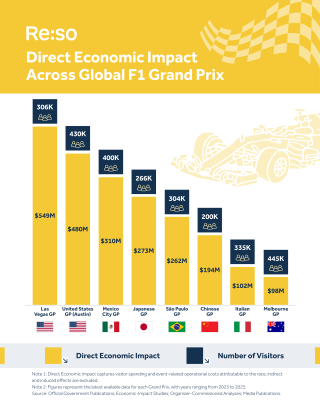



The economic return of a Grand Prix weekend is shaped far more by how much visitors spend than by the sheer size of the crowd. High-cost destinations such as Las Vegas and Austin generate the strongest direct economic impact because they combine premium hotel rates, high-end hospitality offerings, and a large share of international visitors who stay longer and spend more. In Las Vegas, the effect is amplified by extensive temporary infrastructure and event-operations activity, which drives significant contractor, logistics, and construction spending. As a result, cities with mid-sized attendance can outperform much larger events in lower-cost markets.
By contrast, some long-established races deliver exceptional attendance yet produce more modest direct impact once local pricing and event format are taken into account. Melbourne is a clear example: it attracts a predominantly domestic audience with shorter stays, naturally limiting accommodation and tourism spending. Monza, despite drawing a majority of international spectators, operates in a fundamentally lower-cost environment, with more moderate hotel, hospitality, and ticket prices than premium U.S. destinations. Furthermore, the execution and organization of the Monza race have faced significant criticism from fans in recent years, suggesting that higher levels of dissatisfaction may also dampen on-site spending.
Mid-tier markets such as Suzuka, São Paulo, and Shanghai fall between these extremes. They attract strong tourism and corporate interest, but lower local price levels moderate per-visitor spending even when attendance is robust. Taken together, the data shows that visitor profile, stay duration, event format, and local price structures—not crowd size—ultimately determine the economic footprint of each Grand Prix. Italy and Australia illustrate this dynamic clearly: both host hugely popular races, yet their structural cost advantages and permanent-circuit formats limit the volume of spend required to stage the event, placing them below newer, higher-spend destinations in overall direct economic contribution.