

Introduction: A New Era of Mega-Events in the Gulf
Countries around the world have long competed to host global mega-events. From Olympic bids to world expos, these mega-events have enabled national development and created unforgettable memories across generations. Today, these events are evolving beyond entertainment to become catalysts for economic transformation and lasting impact.
Gulf countries are no exception. As part of broader economic agendas, mega-events have claimed prominent spots on the global calendar, including landmark events such as the FIFA World Cup 2022 in Qatar, Expo 2020 in the UAE, and several F1 Grand Prix races across multiple GCC countries. However, these events are not simply about visibility anymore, they are embedded in national strategies as enablers of a broader shift of transitioning to a new era of economic resilience, private sector growth, and long-term sustainability.
Mega-Events as Strategic Drivers of National Transformation
GCC governments have begun treating mega-events as policy instruments embedded in their long-term national agendas. Substantial investments are being committed to hosting such events, with expectations of long-term benefits for on tourism, private sector growth, and infrastructure development.
 Saudi Arabia
In Saudi Arabia, global events are highlighted under Vision 2030 as catalysts for the Kingdom’s national diversification plans. The Kingdom has been selected to host landmark global events including Riyadh Expo 2030, the FIFA World Cup 2034, and the Asian Winter Games 2029, while simultaneously building its large-scale event-hosting capabilities through initiatives such as Riyadh Season, which attracts millions of visitors each year. These commitments showcase how the Kingdom is leveraging events to accelerate tourism, develop its infrastructure, and integrate events into its economic diversification agenda.
 UAE
UAE
In the UAE, mega-events are deliberately integrated into national and Emirate-level strategies. Dubai’s D33 Economic Agenda explicitly identifies business events as drivers of economic growth, supported by the creation of Dubai Business Events, a dedicated convention bureau tasked with establishing Dubai as a leading global destination for business events that support the development of Dubai’s economy. Meanwhile, Abu Dhabi has also made significant investments in mega-events through initiatives such as the Mega-Events Fund under Ghadan 21, an AED 600 million fund aimed at hosting world-class business and leisure events to strengthen its international positioning and support its diversification efforts
 Qatar
Qatar
Similarly, Qatar takes a strategic approach through its National Tourism Sector Strategy 2030, which places emphasis on hosting world-class events throughout the year. The successful hosting of the FIFA World Cup firmly positioned Qatar on the global stage, demonstrating its capability to deliver the world’s largest sporting events. The tournament enabled major infrastructure upgrades, enhanced global visibility, and strengthened their events ecosystem – assets Qatar is now leveraging to host future mega-events such as the Asian Games 2030 and the FIBA Basketball World Cup 2027, while officially bidding for the Olympic and Paralympic Games 2036.
 Bahrain
In Bahrain, large-scale events are positioned as enablers of economic diversification and tourism growth under the Economic Vision 2030. The Kingdom has focused on hosting a range of international sporting, cultural, and MICE events, most notably the Formula 1 Bahrain Grand Prix – the longest-running F1 race in the region – to strengthen its global presence and boost tourism. This long-term strategy has translated into a lasting legacy, with Bahrain extending its hosting rights through 2036 – the longest Formula 1 contract with any circuit worldwide.
Collectively, these examples from GCC countries highlight how mega-events have been embedded within national strategies as vehicles of diversification and global positioning. However, the true measure of their success lies not only in securing hosting rights but in the lasting economic channels they revive after the closing ceremonies are over. Tourism flows, infrastructure upgrades, private sector growth, and knowledge transfer are the areas where the GCC event economy proves its long-term value, and where policy ambitions translate into sustained impact.
From Economic Momentum to Legacy: Lessons from Olympic Legacy Models
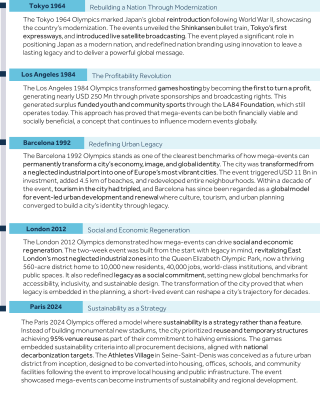
Beyond generating immediate visibility and tourism spikes, the true value of mega-events lies in what they leave behind. The most successful host countries treat these events as catalyst for new industries, urban innovation, and continued global influence. The Olympic Games are notable examples of how host cities have leveraged mega-events to transform their economies and infrastructure while creating enduring, long-term impact.
The Beginning of the GCC’s Legacy Era
Saudi Arabia
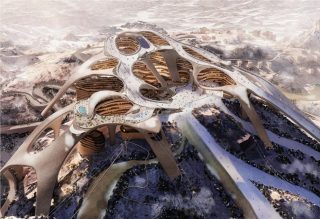
Saudi Arabia is designing legacy through Vision 2030’s giga-projects. These projects which include Qiddiya, Diriyah Gate, and NEOM are being built as permanent entertainment and tourism ecosystems designed to host events for decades. Each giga-project is created to spark new industries, create jobs and reshape how citizens and visitors engage with culture, sports, and heritage. Notably, NEOM’s Trojena was selected to host the 2029 Asian Winter Games, which exemplifies the model of using strategic hosting to highlight new regions, diversify tourism, and plan a legacy of long-term destination development far beyond the event.
UAE
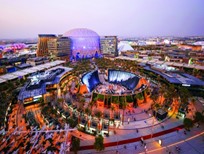
The most prominent example in the UAE is the transformation of Expo 2020 Dubai into Expo City Dubai, a fully functioning smart city hosting green-tech firms, cultural institutions, and global organizations. The event was designed from the outset with a legacy that extends far beyond the event, strategically planned to continue creating growth opportunities for years to come. It has generated significant long-term economic, social and environmental benefits for Dubai and the UAE. According to an EY study, Expo 2020 and its legacy are projected to contribute USD 42.4 Bn in gross value added (GVA) to the UAE economy between 2013 and 2042.
Qatar
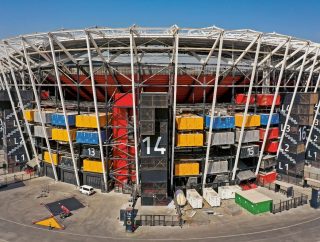
Qatar’s FIFA World Cup 2022 further reinforces this shift in the GCC. Beyond the event, it pioneered sustainable stadium architecture and urban integration. Stadium 974 constructed from 974 recycled shipping containers became the first fully demountable World Cup venue, paving the way for innovation in mega-events planning, flexible hosting models, and scalable infrastructure. Furthermore, transport and hospitality upgrades such as the Hamad International Airport expansion, the Doha Metro, and Lusail City redevelopment continue to support citizens’ daily life and year-round tourism. The event’s legacy lives not only on international visibility but improved mobility and urban liveability.
Bahrain
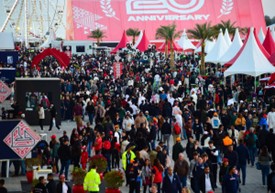
Bahrain, the first Middle Eastern host of a Formula 1 Grand Prix, provides another clear illustration of enduring legacy in action. Since its inaugural race in 2004, the Bahrain International Circuit (BIC) has evolved from a single annual race venue into a multi-event economic anchor. Today, BIC operates year-round hosting regional motorsport series, corporate events, exhibitions, training academies, and more. Its model demonstrates how early event infrastructure can mature into a permanent driver of economy, sports, and entertainment – sustaining returns nearly two decades after its establishment.
Hosting with Purpose: The Road Ahead for the GCC
As the global playbook of mega-events evolves, it has become clear that success is no longer measured by who can host the biggest show. It is measured by who can turn a moment into momentum and treat legacy as a deliberate strategy for national advancement.
The GCC understands this shift. Over the past decade, the region has demonstrated an ability to not only deliver world-class events but to use them as strategic accelerators of economic diversification, urban development, and global positioning as key mega-event hosts. With Expo 2030 in Riyadh, FIFA World Cup 2034, and the GCC’s growing portfolio of sport events, international conferences, cultural festivals, and global summits, the region’s next chapter of hosting will be defined by purposeful legacy creation.
It is evident how mega-events can shape industries, strengthen institutions, and develop human capital after closing ceremonies. If executed with the same strategic foresight demonstrated in recent years, the GCC could further redefine what it means to host global events, transforming the traditional cycle of spectacle and short-term aftermath into a continuous engine of national transformation.
References:
- UN Tourism (2025)
- EY (2022)
- Saudi Vision 2030 (2025)
- Saudi Tourism Authority (2025)
- General Entertainment Authority (2025)
- Quality of Life Program (2025)
- Events Investment Fund (2025)
- Dubai Department of Economy & Tourism (2025)
- Dubai Business Events (2025)
- Dubai D33 Economic Agenda (2025)
- Expo 2020 Dubai (2022)
- UAE Ministry of Economy (2024)
- WAM – Emirates News Agency (2025)
- Qatar Tourism (2023)
- Government Communications Office – Qatar (2024)
- Qatar National Tourism Sector Strategy (2025)
- International Monetary Fund (2024)
- Global Business Outlook (2024)
- International Olympic Committee (2024)
- Japan House London (2024)
- Marketplace (2016)
- Inside the Rings (2023)
- Barcelona Metropolitan (2024)
- HCC Hotels (2023)
- BBC (2022)
- Queen Elizabeth Olympic Park (2024)
- GHD Insights (2024)
- OECD (2025)
- Sage Journals (2023)
- BBC (2022)
Related articles

GCC Tourism and Spending: Leading the World in Outbound Travel

Metaverse Tourism: Will Virtual Travel Compliment or Compete with the Real Thing?